How to Measure an Existing Volleyball Floor Sleeve
A field-ready checklist for measuring sleeve depth, inside diameter, court spacing, and condition before choosing volleyball uprights or adapters.
Reviewed by Volleyball Shoppe product team
Key takeaways
- Measure the sleeve opening's inside diameter, not the outside cover plate or an old upright.
- Measure from the clear bottom of the sleeve to the finished floor and record every court position.
- Confirm the measurements, system model, installation condition, and included adapters before ordering uprights.
Gather the right tools and identify every sleeve
Use a tape measure plus an inside-measuring tool such as a compass or divider. Photograph each opening, cover, and nearby court marking. Label the measurements by court and by position so two similar-looking sleeves are not treated as one measurement.
- Remove loose debris only when the facility's maintenance procedure allows it.
- Do not force a measuring tool past an obstruction or alter the sleeve.
- Record the existing upright manufacturer, model, adapter, and pole markings when available.
Measure clear sleeve depth
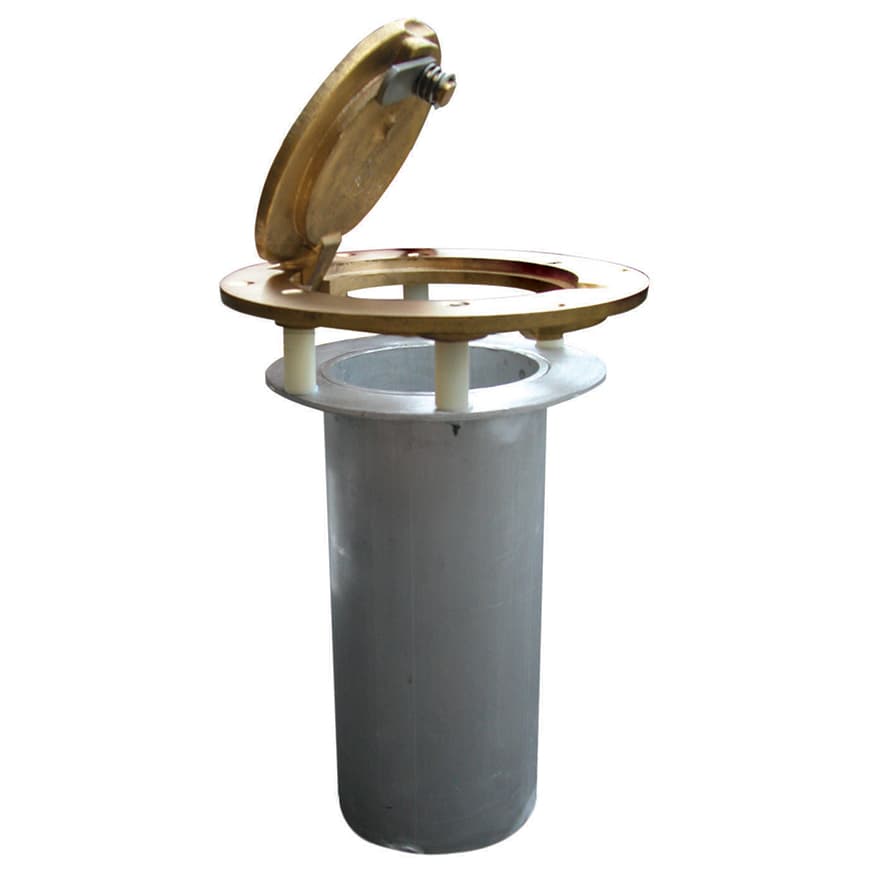
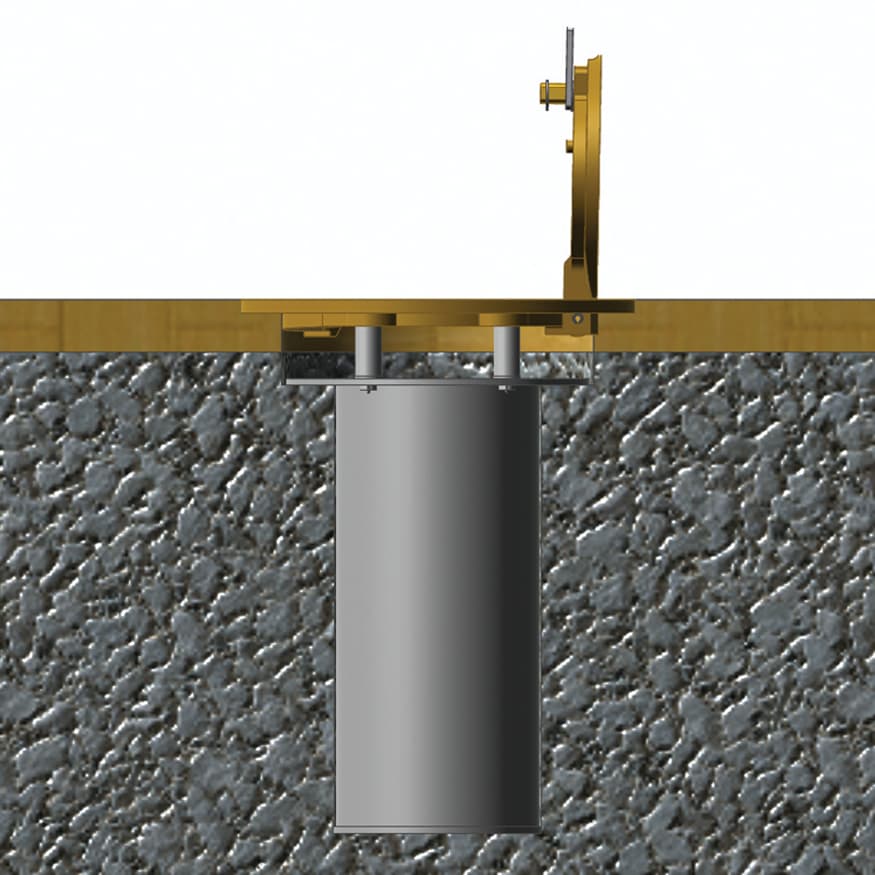
Jaypro's measuring guidance starts with the distance from the clear bottom of the sleeve to the finished floor. Confirm that the measuring device reaches the actual bottom rather than packed debris, a cap, or another obstruction, then record the depth for each opening.
- Measure vertically from the bottom to the finished playing surface.
- Repeat the measurement instead of rounding to an expected size.
- Flag water, corrosion, movement, damaged covers, or blocked sleeves for facility review.
Measure the inside diameter
Measure the inside diameter of the sleeve opening. Jaypro recommends using a compass, then measuring the compass opening with a tape rule. This helps avoid errors from trying to read a curved opening directly. The cover plate's outside diameter is not the upright size.
- Measure across the widest interior opening without including the sleeve wall.
- Check more than one direction if the opening may be out of round.
- Record the actual measurement before labeling it 3 inch, 3-1/2 inch, or another size.
Record court spacing and installation details
Sleeve diameter alone does not confirm a compatible system. Measure center-to-center court spacing, note the floor construction and cover style, and identify whether adapters are already present. A trained installer or manufacturer may need to review damaged, moving, nonstandard, or floating-floor sleeves.
- Measure center-to-center spacing between the two playing uprights.
- Record finish, cover diameter, latch condition, and any reducer or adapter.
- Take one wide court photo and close photos of each sleeve and label.
Match measurements to the exact configuration
Manufacturers offer systems for different sleeve sizes, and some uprights use a manufacturer-specified adapter. For example, Jaypro lists separate PowerLite configurations for 3-1/2 inch sleeves and 3 inch sleeves. Confirm the exact SKU and adapter arrangement rather than assuming that two products with similar names fit the same opening.
- Send the measurements, photos, existing model, and court count with the quote request.
- Ask whether sleeves, reducers, covers, and installation work are included or separate.
- Do not order based only on the old pole's outside measurement or a product-family name.
Primary references
Rules and equipment guidance can change. Use the current governing documents for final competition decisions.