Practice Volleyball vs Game Volleyball: Buying Guide
Compare match balls, practice volleyballs, and youth trainers, then plan an honest ball mix for a school, club, PE program, or camp.
Reviewed by Volleyball Shoppe product team
Key takeaways
- A game volleyball must satisfy the rules for the specific league or event; the words game ball or indoor volleyball alone do not prove eligibility.
- Practice volleyball is a buying role, not one universal rules category. Programs can practice with their match model or choose a separate ball for daily volume.
- The best practice option usually matches the players' required size and weight while balancing feel, durability, and budget.
- Youth and soft-touch trainers can make instruction more approachable, but they are not automatically legal for sanctioned matches.
- A hybrid inventory gives many schools and clubs a consistent match set without paying competition-ball prices for every drill station.
The quick answer
Buy the exact ball required for competition first. Then decide whether using that same model for every practice repetition is worth the cost for your program. Schools and clubs often benefit from a clearly labeled match set plus a larger practice inventory chosen for similar feel, reliable construction, and daily use. PE classes and beginner programs may also need a separate group of lighter or softer instructional balls.
- Game set: the exact approved, marked, or event-specified model.
- Practice set: the correct size and weight for the players, selected for repetition volume, feel, durability, and budget.
- Instructional set: lighter, softer, or oversized balls used intentionally for beginner development.
- Do not move a training ball into a sanctioned match unless the current rules and event organizer allow it.
What makes a volleyball a game ball?
Game-ball status comes from the competition rules, not simply from price or marketing language. USA Volleyball publishes size, weight, pressure, color, and construction requirements, while an event organizer may also identify approved or required models. For high school play under NFHS rules, the exact ball used in the contest must display the NFHS Authenticating Mark. Beginning in 2026-27, a state association may adopt textured volleyballs, but those balls must still meet the applicable requirements.
- Confirm the governing body, age division, season, and event packet.
- Check the exact SKU and physical ball for the required mark; similar model names can represent different approvals.
- Keep match balls properly inflated, clean, and stored apart when the program needs predictable game-day condition.
- Recheck requirements each season instead of assuming last year's model is still the event choice.
What makes a good practice volleyball?
Practice volleyball is not a single regulated product class. It describes how the program plans to use the ball. A useful practice ball should fit the players, support the skills being trained, and behave consistently enough that athletes can repeat contacts with confidence. For older junior and adult indoor play, the USA Volleyball standard reference is 65-67 centimeters in circumference, 260-280 grams in weight, and 4.26-4.61 psi. Younger divisions and instructional programs can use different specifications, so verify the applicable rule before ordering.
- Size and weight appropriate for the team's division.
- A cover and touch that fit the practice environment and coaching goals.
- Reliable shape and pressure retention across a large working inventory.
- A unit cost the program can sustain when balls wear, disappear, or need replacement.
- Clear labels when different weights or training purposes share one storage room.
Should a team practice with the same ball used in matches?
Using the match model in practice gives players the closest possible feel before competition and simplifies equipment decisions. The tradeoff is that a full practice inventory of premium balls costs more and places more wear on the match model. A separate practice set can stretch the budget and protect game-day equipment, but the practice ball should not feel so different that every competition requires a major adjustment.
- Use the same model throughout when touch consistency is the top priority and the budget supports the required quantity.
- Use a hybrid inventory when the program wants a protected match set and more balls for high-repetition drills.
- When mixing models, compare size, weight, cover feel, panel shape, and inflation instead of choosing by price alone.
- Let coaches test one sample before committing to a large practice order when feel is especially important.
A practical high school buying plan
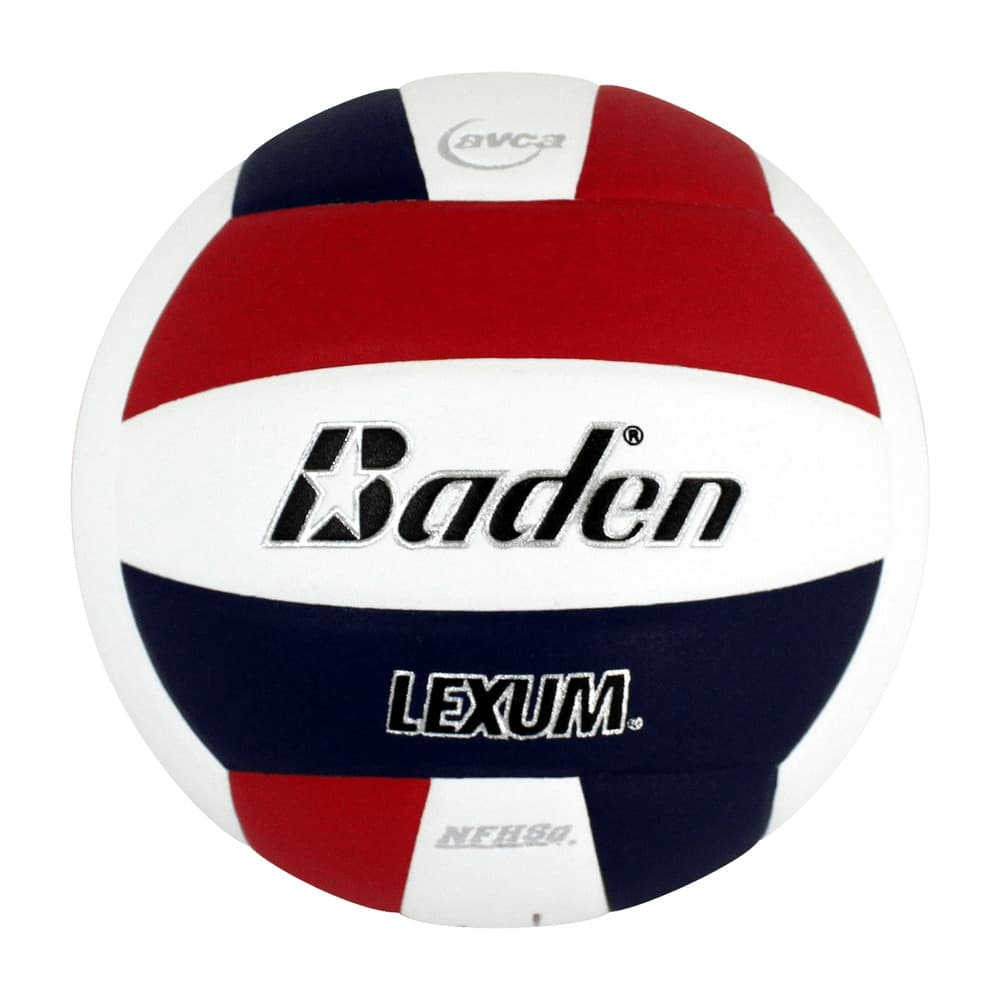
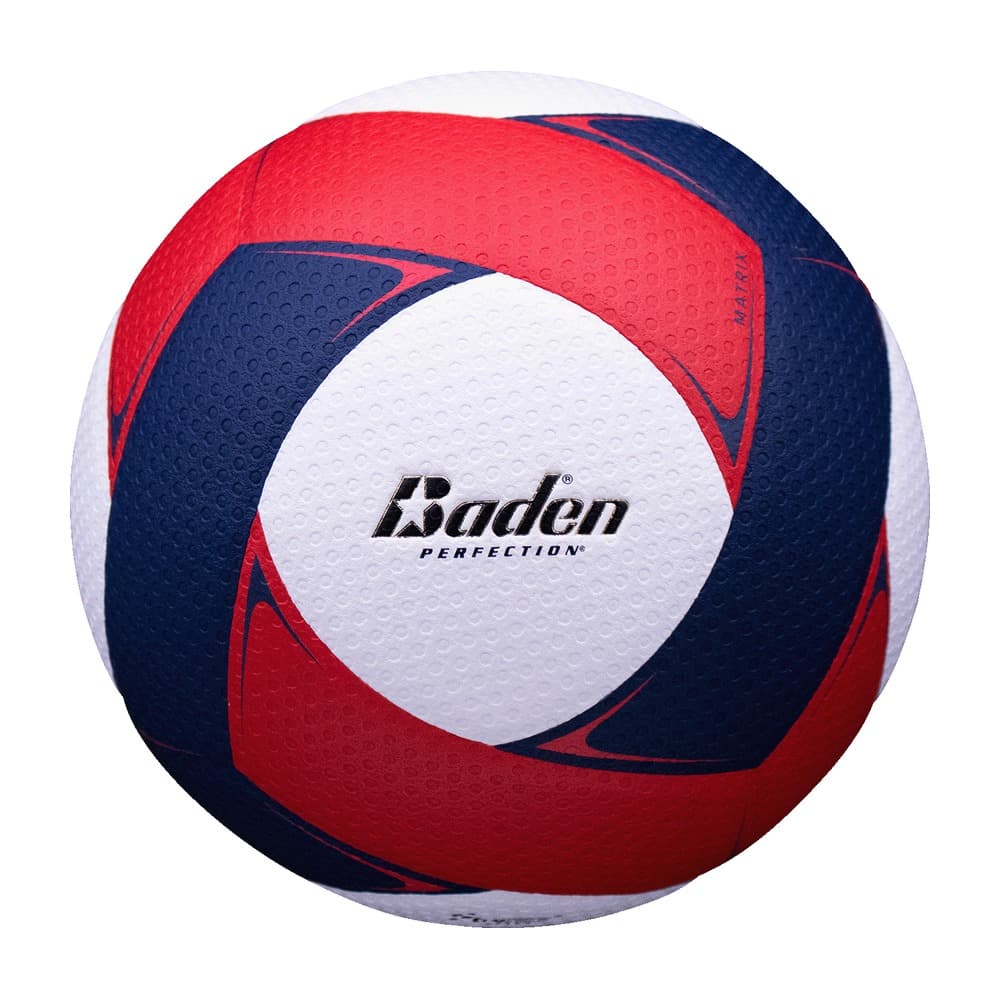
Start with an NFHS-marked match ball accepted by the school, league, state association, and event. The Baden Matrix NFHS V5M and Lexum NFHS VX450C-210 are examples in the current Volleyball Shoppe catalog, but approval must be checked on the exact model and ball. A closely matched practice set can then cover serving, passing, setting, and hitting stations without consuming the match inventory.
- Label and store the match set separately from daily practice balls.
- Do not confuse the NFHS-stamped Matrix V5M with the non-stamped Matrix V5M-NS.
- Choose practice quantity by the number of athletes active at the same time.
- Add a pump, accurate pressure gauge, spare needles, and a repeatable inspection routine.
A practical club buying plan
Club programs should check the current tournament packet and region guidance because the selected match model can vary by event. A club that regularly sees one model may decide to use it throughout practice. A multi-team club can instead keep smaller event-specific match sets while standardizing a durable practice model across age groups that use the same legal size and weight.
- Review the actual tournament schedule before choosing one ball for every team.
- Separate lighter 12U or instructional inventory from standard-weight balls.
- Calculate each court's simultaneous players rather than ordering from total club enrollment.
- Use carts or bags with enough capacity for each court and a clear return location after practice.
PE, recreation, camps, and beginner programs
For instruction, choose a ball that fits the players' age, strength, skill level, and lesson objective. A standard official-size ball may suit older students, while lighter or soft-touch products can reduce sting and make success more attainable for beginners. The Baden 12U Light VX450L and Softlight Youth VXT1 illustrate those instructional roles. They should remain clearly separated from competition inventory unless the exact ball satisfies the event's current rules.
- Match the ball to age, strength, skill level, and the lesson objective.
- Use soft or light models intentionally rather than treating every volleyball as interchangeable.
- Keep a standard-size and standard-weight progression available as players advance.
- Avoid promising that a youth trainer is game legal without checking the governing rules.
How to split the equipment budget
Build the inventory in three decisions: compliance, working quantity, and replacement cost. First reserve enough for the required match model. Next size the practice set around players who will be active simultaneously; a useful planning range is covered in our separate ball-count guide. Finally add a modest spare allowance and the storage and inflation tools needed to keep the inventory usable.
- Competition-first plan: protect the match set, then maximize practice repetitions with a separate model.
- Consistency-first plan: use one approved model for matches and practice, then add spares for wear and loss.
- Instruction-first plan: use soft or light balls for beginners and maintain a smaller standard-ball group for progression.
- Review inventory before each season and replace balls based on condition, pressure retention, and program fit.
Baden examples by buying role
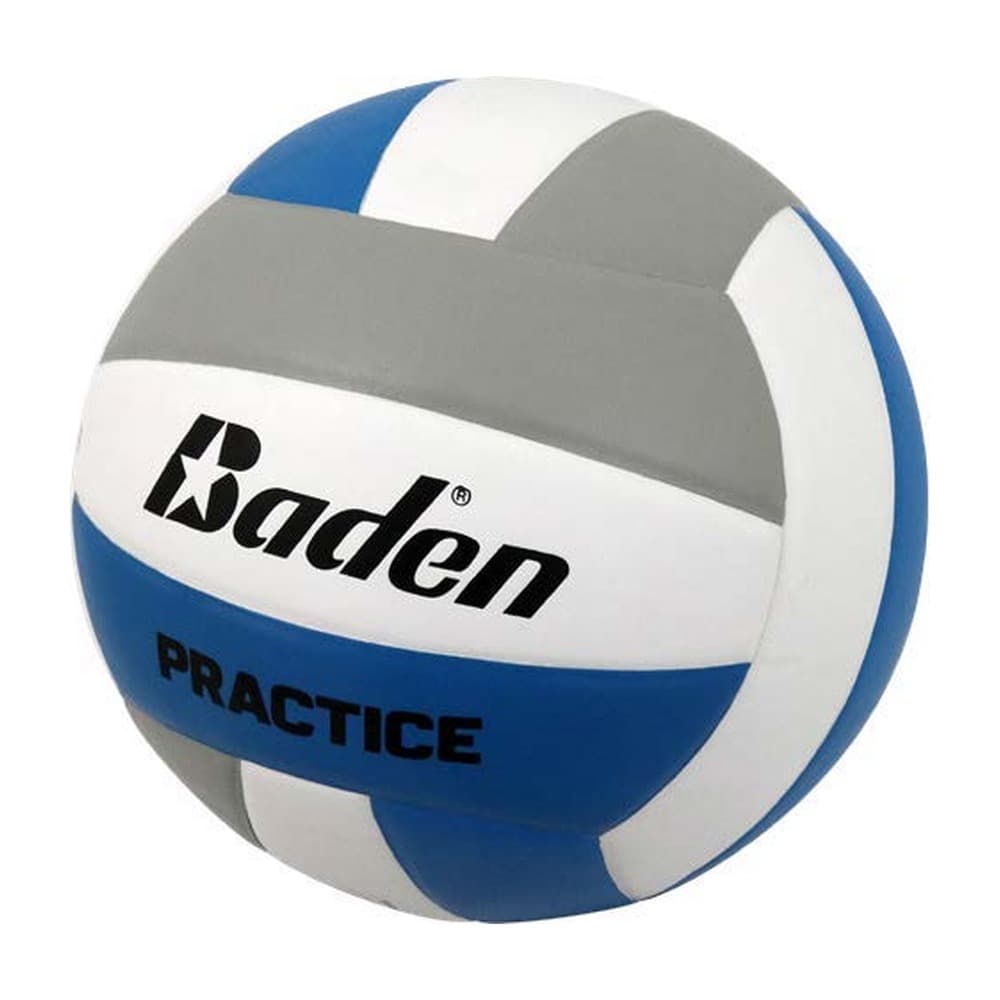
The current Baden catalog gives buyers several distinct roles to compare. Matrix NFHS V5M and Lexum NFHS VX450C-210 are competition-oriented high school options. Practice Leather VX5EPL, Precision Composite V5PR, and All-American VX500 can fill daily training or program roles based on desired cover feel and budget. The 12U Light VX450L, 10U Light V5PRL, Softlight VXT1, and oversized Softlight VXT2 are development choices rather than automatic substitutes for a standard match ball.
- High school game comparison: Matrix NFHS V5M and Lexum NFHS VX450C-210.
- Practice comparison: Practice Leather VX5EPL, Precision V5PR, All-American VX500, and Lexum VX450C.
- Youth progression: 12U Light VX450L and 10U Light V5PRL.
- Beginner instruction: Softlight VXT1 and oversized Softlight VXT2.
- Verify the exact product page, physical mark, and event requirements before game use.
Common buying mistakes
The most expensive error is not necessarily choosing the wrong brand. It is buying a large quantity before confirming the competition requirement, player group, and practice workflow. A small model mismatch becomes a large budget problem when repeated across several dozen balls.
- Assuming every indoor or game ball is approved for every league.
- Ordering by total roster size instead of simultaneous drill participation.
- Mixing standard, light, and oversized balls without visible labels.
- Overinflating balls and judging quality from a touch problem caused by pressure.
- Spending the full budget on premium match balls while forgetting carts, gauges, pumps, and replacements.
- Choosing the lowest unit price without comparing feel, construction, and expected use.
The bottom line
A game ball answers a rules question; a practice ball answers a program-design question. Confirm the competition model first, then build enough appropriate practice inventory for the repetitions your athletes need. When the match requirement, age groups, or quantities are unclear, Volleyball Shoppe can review the list before the school or club commits to a full order.
Primary references
Rules and equipment guidance can change. Use the current governing documents for final competition decisions.